Thermal insulation – what it is and when to do it
Thermal insulation is a way to save money and ensure thermal comfort. Check when it’s worth planning and what benefits it provides.
Thermal insulation — what it is and when to install it
Most construction projects, whether for private or industrial use, include thermal insulation. It is a fundamental way to reduce heat loss from the interior and lower heating bills. What should you know about thermal insulation—when should it be installed and what materials are used in practice?
Thermal insulation – what is it and what are its functions?
Thermal insulation of a building is the process of limiting heat exchange between the interior and the exterior. It is important in any structure where maintaining specific thermal conditions is required. This does not only apply to single-family homes—thermal insulation is also used in industrial halls and agricultural buildings. Installing or upgrading insulation materials is important both in new construction and in existing buildings to improve thermal performance.
The level of heat transfer (thermal transmittance) is expressed by the coefficient U, measured in W/m²K. The better the insulation, the less heat escapes outside. Minimum insulation standards are defined by building regulations. For example, external walls should have a U-value between 0.20 and 0.90 W/(m²K), depending on temperature, while floors on the ground should range from 0.30 to 1.50 W/(m²K). The lower the U-value, the less heat is lost.
These regulations define only the minimum acceptable level. If you aim for a passive building standard, more advanced—and therefore more expensive—solutions are required.
Why is thermal insulation worth it?
The main purpose of thermal insulation is to reduce heat loss from a building. As a result, more thermal energy stays inside, ensuring comfort for occupants while preventing unnecessary energy waste. This means not only better comfort but also financial savings.
A properly insulated building is also more resistant to environmental factors such as moisture, mold, UV radiation, and temperature fluctuations. In practice, this leads to lower maintenance costs, as repairs are needed less frequently.
An insulated building also has a smaller environmental impact due to reduced greenhouse gas emissions. The more energy-efficient the building, the more environmentally friendly it is.
When is the best time to install thermal insulation?
The best time to carry out thermal insulation work is during spring and summer, when there is no rain and temperatures range between +5°C and +25°C. Performing insulation work in rain, frost, or extreme heat may cause plaster to crumble or insulation layers to detach.
It is best to hire professionals, but if you plan to do it yourself, make sure to eliminate all thermal bridges (especially at joints between panels). Proper surface preparation may also be necessary.
Methods, materials, and costs of building insulation
Many different insulation materials are used in construction. They vary in U-value, weight, installation method, and cost. The most popular include:
- EPS polystyrene (expanded polystyrene) – lightweight and durable foam, inexpensive and easy to install, but relatively less resistant to mechanical damage. U-value: 0.036–0.045 W/(m²K)
- Mineral wool (glass or rock) – lightweight and effective insulation, but absorbs moisture easily and is slightly more expensive than polystyrene. U-value: 0.032–0.044 W/(m²K)
- XPS (extruded polystyrene) – stronger and less absorbent than EPS, but more expensive. U-value: 0.029–0.036 W/(m²K)
- Polyurethane foam (PIR) – lightweight, excellent insulation properties, low water absorption. Requires less material for the same effect but is significantly more expensive. Available as boards or spray foam, useful for sealing small gaps.
When choosing insulation material, you need to balance cost and performance. Passive buildings typically use top-quality solutions, while industrial or warehouse buildings may opt for more economical options.
There are two main insulation methods:
- Wet method (light wet) – insulation is glued to the wall and covered with a thin plaster layer
- Dry method (light dry) – insulation is installed using a frame structure, without adhesive, allowing work in any seaso
The cost of insulation depends on many factors, including material type and thickness. In 2025, the cost per square meter typically ranges from 120 to nearly 300 PLN.
Where does heat escape from a house? Common thermal bridges
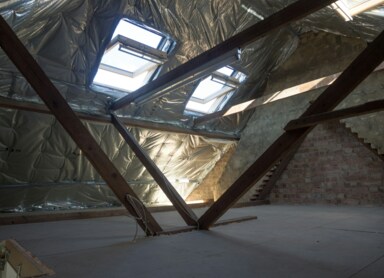
If you want to reduce heating energy consumption, start by assessing insulation quality. Professionals refer to weak points as thermal bridges. These most often occur around windows and doors, chimneys, lighting openings, balcony connections, and foundations. They can appear as lines or points—essentially gaps in insulation through which heat escapes.
Ignoring thermal bridges can lead not only to energy loss and higher bills but also to mold growth, which is harmful to health and may weaken building structures.
Detecting them is not always easy, as many gaps are too small to see. A thermal imaging inspection is recommended—it can identify even minor temperature differences. For a few thousand PLN, a specialist can detect all thermal bridges at once.
How does thermal insulation affect heating bills?
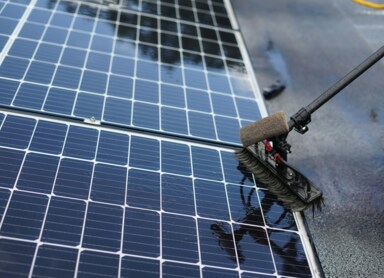
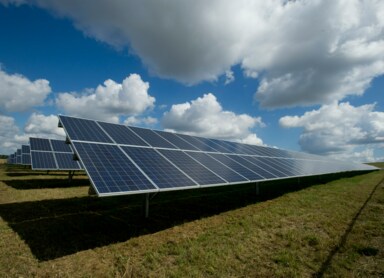
Most people consider insulation primarily for savings—and rightly so. A well-insulated building loses very little heat. If you have invested in a photovoltaic system but still face high electricity bills, it is worth checking the insulation quality first. This is especially important in older buildings, where outdated materials may have lost their effectiveness.
For companies looking to reduce costs—whether through energy agreements like PPA or replacing windows and doors—it is advisable to first assess walls, partitions, ceilings, and floors. These are often the main sources of heat loss.